AI is taking cybersecurity jobs at junior and experienced levels alike
Organizations are cutting cybersecurity roles as they adopt AI, even while reporting shortages of the expertise needed to manage threats, according to Barracuda’s Cybersecurity Skills Gap Report.
56% have experienced professional workforce reductions linked to AI, evenly divided between entry-level and higher-level roles.
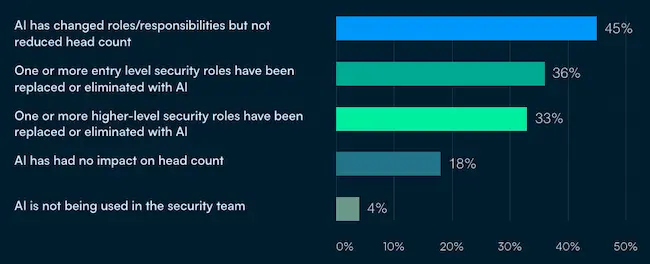
Has your security head count been impacted at all by AI? (Source: Barracuda)
AI changes the work security professionals do
AI and automation are expected to handle more routine analysis, connect related security events, and suggest responses over the next year. Security professionals would increasingly focus on investigating harder-to-detect attacks, checking AI findings, and making decisions during incidents.
Their responsibilities would include setting long-term security priorities and explaining risks to business leaders. Overseeing automated tools requires assessing the evidence behind recommendations and deciding whether a proposed response is appropriate.
Security work requires technical knowledge, judgement, communication, and business understanding. Teams need to understand how threats affect their organization and assess the consequences of actions taken during an incident.
Skills gaps put pressure on teams
Almost all respondents reported cybersecurity skills gaps. The most common involved AI-related risks, followed by identity and phishing threats. Half said security teams were expected to support expanding digital operations without additional resources.
“The findings show how the impact of AI is changing the cybersecurity landscape faster than many security teams can build the necessary skills, visibility, and governance,” said Siroui Mushegian, SVP and CIO at Barracuda.
“Organizations need to reshape their security teams, combining the power of AI and automation with human expertise, judgement, and visibility. We must nurture these critical skills in the next generation of cybersecurity professionals, building new development pathways and opportunities for hands-on experience.”
People retain responsibility during incidents
69% used incident-response arrangements combining AI or automation with human investigation and decision-making. People retained responsibility for context, judgement, and final decisions. www.barracuda.com
Checking AI-generated findings is becoming a greater part of security professionals’ work. Teams need to understand the evidence, assess a recommendation’s reliability, and consider its effect on business operations. Incident leadership involves coordinating the response and keeping essential services running.
Entry-level changes affect career development
Removing entry-level activities or roles could limit opportunities to gain experience. Employers would need alternative development pathways for future investigators, incident leaders, and security decision-makers.
Senior professionals are expected to develop AI literacy, identity expertise, communication skills, and knowledge of governance and organizational risk.
The recommendations include investment in skills across detection, response, recovery, and preparation, with defined responsibilities for automated systems and the people overseeing them.